Restoratives 200w Pulsed Fibre Laser

Restorative Techniques ThermaLase is a 200W Class 4 dual-axis fibre Laser. It has been designed by our team of experts, providing industry-leading thinking on safe and environmentally friendly masonry cleaning and conservation. Our Laser is designed to be reliable, compact and portable.

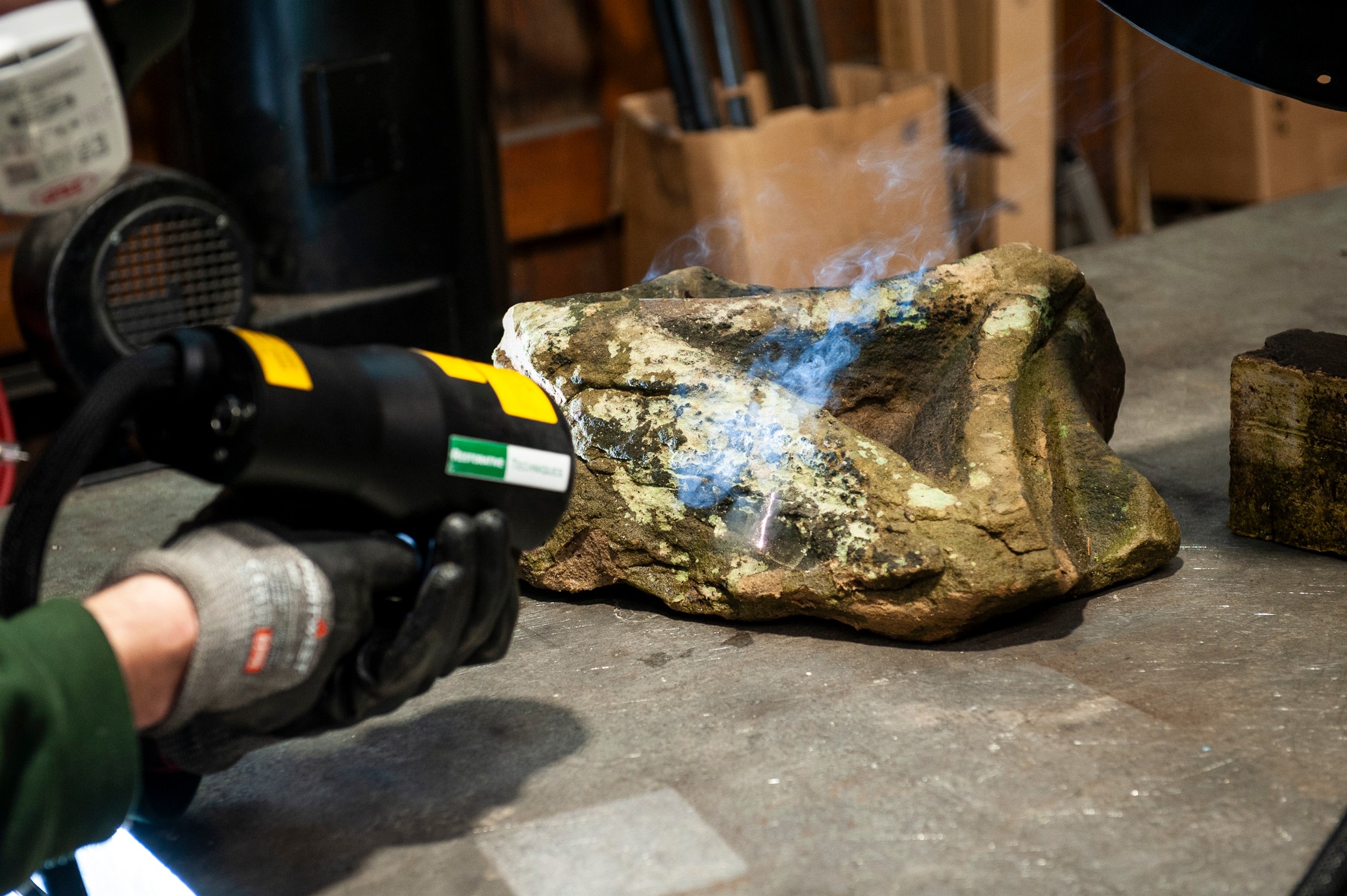
Whether the subjects are historic buildings, landmarks or sculptures, our Laser Cleaning Machine is designed for the targeted removal of stubborn deposits from even the most delicate of substrates. Its precision-cleaning capabilities can deliver an unrivalled finish, and it has been trusted across sculpture and architectural conservation projects for its precision, portability, and safety.

It is engineered for ease of transport and use, weighing only 35 kg and capable of running on standard domestic power supplies (110-240V AC).

Non abrasive, for superior surface protection

Uses a dry cleaning process, with low operating expenses

Eco-friendly - no chemicals, solvents or abrasives, and no contaminated debris produced

Download our brochures

Technical Guide: download our technical guide for the ThermaLase is a 200W for an overview of the product. We explain how the ThermaLase works, offer a description and full technical specification, and advise on how best to clean certain coatings.

Where has it been used?

"When I make contact with Restorative Techniques it feels like I'm the only customer on your books! I feel like I'm part of the family... I also love the whole ethos of conservation and eco-friendly approach to the work."

James McCormack

McCormack Cleaning and Restoration

The Environmentally Friendly Solution For Laser Cleaning

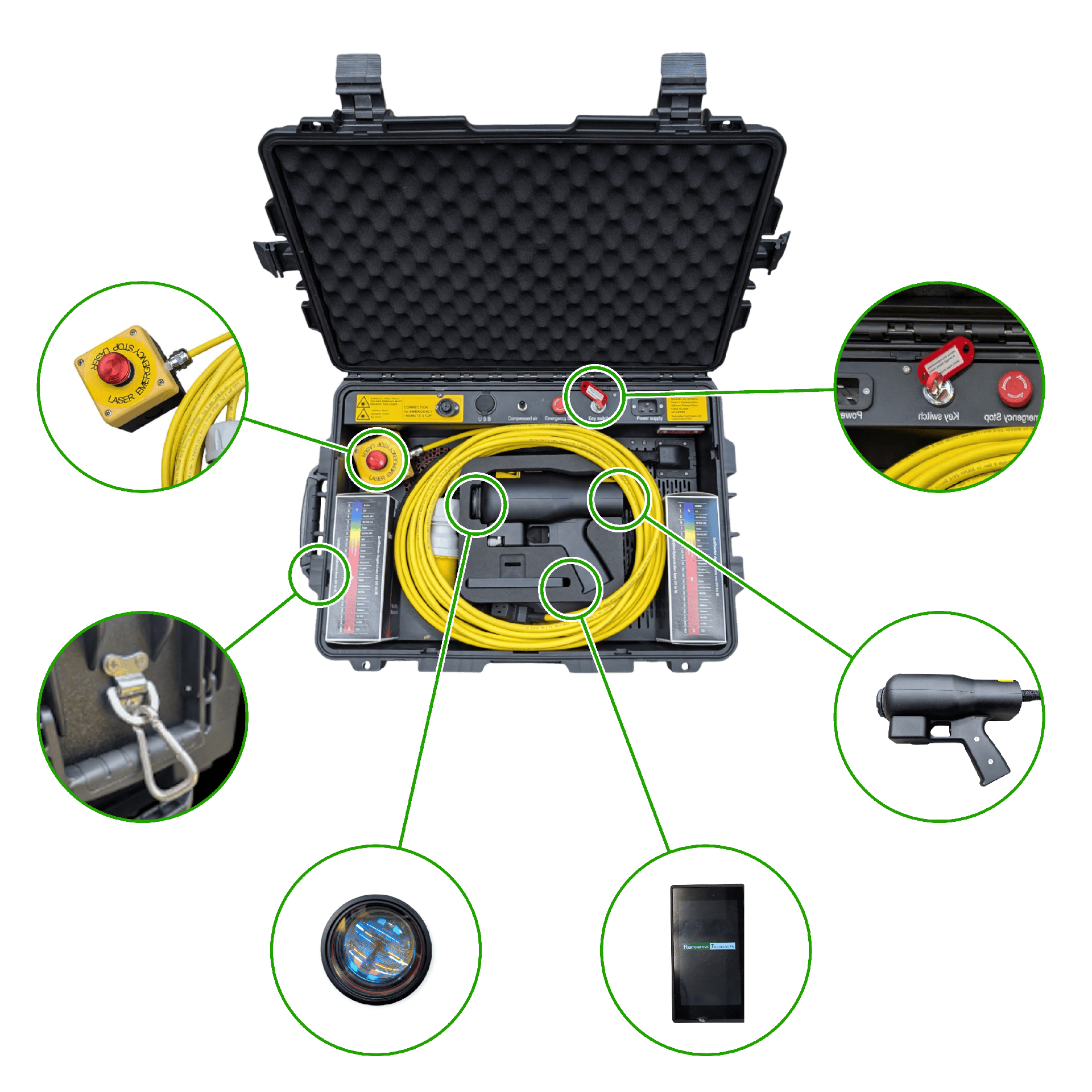
The descriptions match the anti-clockwise close-ups below.

Safety Case

The system has been built into a protective wheeled flight case, allowing for easy transportation and quick set-up. The case stores all the essentials needed to run the laser whilst keeping the electrical system protected from the elements. IP65 rated when shut and latched.

External Emergency Stop

An easily visible 'emergency stop' button is strategically placed to immediately power off the system.

Automated options (e.g. inferred beams) are available on request. 

Loading Eye

A secure fixing/anchoring point. Good for attaching ropes, cables, and hooks - making it easy for rigging, moving, and transporting other lasers.

Lens

The cleaning distance is set by a changeable focusing lens (100mm, 160mm, 240mm), allowing every cleaning challenge to be tackled.

Precision Control Parameters via the Bluetooth Controller

Operators can fine-tune cleaning with six key controls:

  • Laser Power (%)
  • Scan Width (X)
  • Scan Height (Y)
  • Clean Speed
  • Laser Frequency
  • Pulse Width

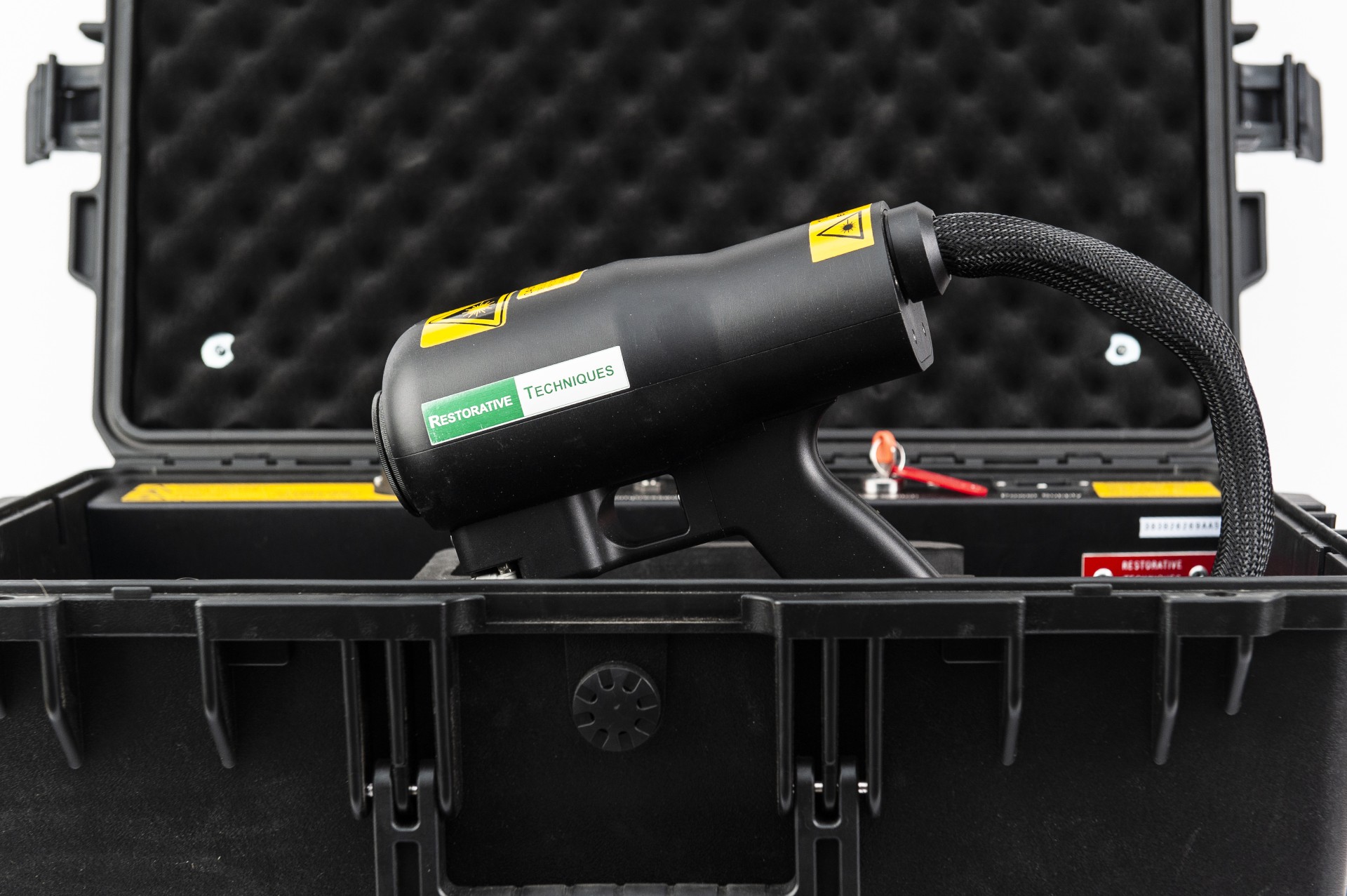
Laser Head

The laser head features an ergonomic design that fits comfortably in one hand.

The dual-axis cleaning head oscillates the laser beam in two directions (X and Y axes), creating multi-dimensional cleaning patterns such as spirals, grids, and waves. This results in wider, more uniform coverage.

Double-press activation trigger, to prevent accidental or unwanted activation of a device or function. The need for two deliberate, successive presses ensures the user's intent, as a single, unintentional tap is unlikely to be followed by another in quick enough succession.

Key operated power switch

The laser tool is turned on and off using the key operated power switch located on the control panel. Once turned on, adjustment to the control parameters is possible.

System Components:

  • Key-operated power switch for restricted access
  • Emergency stop button 10m range as standard
  • Power input cable 5m IEC lead
  • Laser cleaning head with 5m umbilical cord
  • Bluetooth remote control unit with 8 cleaning patterns
  • CE-marked laser safety eyewear

User Interface

The laser has been thoughtfully designed with the user in focus and features a handheld Bluetooth controller for effortless setting adjustments. With six control parameters and eight patterns available, it offers unparalleled control, enabling you to clean even the most delicate surfaces with ease.

Advantages of Laser Cleaning for Stonework 

Laser cleaning offers precise, eco-friendly, and cost-effective surface cleaning and preparation. It’s especially valuable for delicate materials and complex geometries.

  • Precision and Selectivity: Laser cleaning allows for micrometre-level control, making it ideal for intricate carvings, inscriptions, and uneven surfaces.
  • Non-Contact Process: As there is no physical contact, the risk of abrasion, scratching, or mechanical damage is drastically reduced.
  • No Chemical Use: The method avoids the introduction of potentially harmful chemicals, making it environmentally friendly and suitable for sensitive sites.
  • Reduced Residue: Properly controlled laser cleaning minimises the risk of secondary residues or wash-off, which can be a problem with wet cleaning methods.
  • Controlled Depth: Lasers can be calibrated to remove specific layers, allowing conservators to leave desirable patinas or surface features untouched.
  • Minimal maintenance: Non-contact nature reduces wear and tear on machinery.


How It Works

Lasers use photons (the subatomic fundamental particles that convey light) to target soiling at specified fluence levels (a measure of energy density, expressed in joules per square centimetre).

The laser beam emerges through a handpiece, which is held by the operator. Lenses within the handpiece allow for the focusing of the laser beam and control of the energy density at the surface. The laser incorporates an aiming beam (a low-power, continuous, visible laser beam), which itself allows careful targeting of the actual cleaning beam.
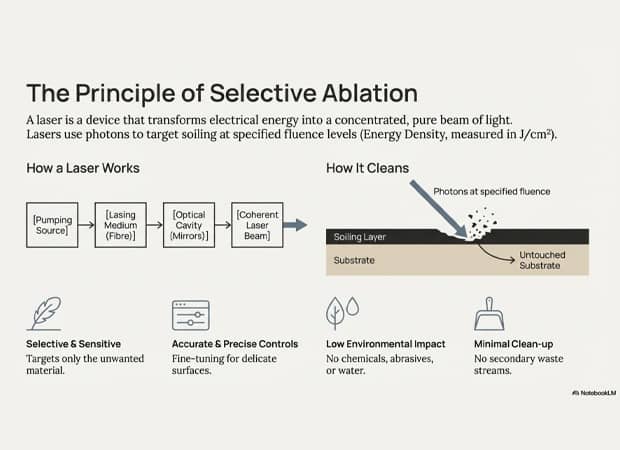
The Principle of Selective Ablation Diagram

Our products have been specifically designed for reliability using high quality, recyclable materials, reducing reliance on chemicals and boosting the performance of milder agents.

Read More

Technical Specifications:

Developed in-house by our experienced team of designers and engineers, our Laser Cleaning Machine meets the specifications below. Other variants are available on request to meet the requirements of different tasks.

  • Model: RT-200W Dual Axis
  • Laser Source: Fibre laser
  • Laser Power: 200W (adjustable 1–100%)
  • Pulse Energy: 5 mJ
  • Pulse Frequency: 40–5000 KHz
  • Pulse Width: 2–500 nanoseconds
  • Laser Wavelength: 1060nm
  • Fibre Cable Length: 5 meters
  • Cleaning Area: 10–250 mm (dependent on power)
  • Lens Focusing Distances: standard 160mm with optional 100mm, 254mm
  • Cooling: Air cooling
  • Dimensions: 530 x 280 x 650 mm
  • Weight: 35 kg
  • Operating Temperature: 5–40°C
  • Power Supply: Dual voltage 100-240V AC single phase (domestic compatible)
  • Control Parameters: 6 adjustable settings (scan width, scan height, laser power, clean speed, laser frequency, pulse width) 


Safety Measures

Safety & Operation

  • Personnel: Only trained operators should use the system. 

  • PPE:

    • Mandatory use of CE-marked laser safety eyewear to specification of D LB8 R LB8 for 1064nm wavelength. 

    • P3 press to check face-fitting masks should be used within the enclosure as an absolute minimum. 

    • No bare skin should be on show and the use of coveralls (Tyvek suits etc) should be used. 

Risk assessment

Health and Safety at Work legislation requires that a risk assessment is carried out for all work-related hazards.

An appointed Laser Safety Officer (LSO)

An LSO is responsible for overseeing laser safety on behalf of the employer and ensuring adherence to safe working protocols. The LSO’s duties involve verifying the presence of proper control measures, consistently monitoring laser risks and the efficiency of the implemented safety measures, and maintaining records of this monitoring. An LSO is a requirement for any projects involving the use of laser cleaning.

Eye tests

Some organisations conduct basic eye tests on individuals before they commence working with lasers, although this is not mandatory according to safety standard EN 60825-1 (IEC TR 60825-14). If performed, it is typically done for medical-legal purposes. It is essential to have a protocol in place for handling laser-related incidents, including their reporting.

Training

Only trained personnel should operate laser cleaning systems. Training should focus on using the system in a conservation setting, understanding associated hazards, equipment operation and safety protocols.

Engineering controls

The use of engineering controls in laser cleaning activities is essential to ensure the safe and controlled use of the laser. Some examples of engineering controls include: maintaining use of the laser within a controlled area, the use of a HEPA filter extraction vacuum to eliminate cleaning by-products, visible warning signs, activated warning lights during laser operation, external emergency shut-down, and human sentry at points of access to the controlled area.