St Andrews Church - Corrine Jackel Conservation

St. Andrew's Church is a Grade I listed ecclesiastical landmark in Shifnal, with roots tracing back to the Anglo-Saxon era. While the original structure dates to the early medieval period, the current building is predominantly 12th and 13th-century Gothic architecture. Due to its significant historical and architectural value, any conservation work requires a highly disciplined approach to preserve the sound historic surface.
Corrine Jackel Conservation, instructed by David Senior and Lupiae Architecture and Conservation, made use of the Restorative Techniques ThermaLase to remove residue and staining of the external effigy and surround at the church.
The Problem
Corrine Jackel Conservation were set the task of testing the effectiveness of the laser cleaning on an external effigy and its surrounding masonry. The effigy had subtle traces of lichen and carbon staining caused by pollution from her time spent enduring the elements.
With her original origins unknown, her age and style don’t match the surrounding masonry, it was important to find a cleaning solution that would prevent any disruption to the substrate or loss of historic material whilst still being highly effective at removing deposits. The solution also needed to meet operational controls and satisfy all stakeholders involved in the project.
The Solution
Corrine Jackel Conservation utilised the Restoratives ThermaLase, a 200W Dual-Axis Fibre laser. The unit comprises of a compact "suitcase" laser weighing 30kg, which allowed for easy transportation across church grounds. The system is also versatile, running on both 110v and 230v domestic power supplies.
The laser cleaning system seemed the obvious choice for the specific application due to its non-contact and non-abrasive nature. For heavy deposits, including a thick build-up of carbon and an unknown oily residue, the laser was operated at its maximum 200W power. Power settings were subsequently reduced for more delicate, friable sections to ensure no harm came to the substrate.
The Outcome
The ThermaLase achieved a uniform level of cleaning, successfully removing carbon and oily residues from the back corners of the effigy and its surrounds. Surface material was preserved and no mechanical wear was caused despite the “very friable” and spalling nature of the stone.
The results at St. Andrew's Church confirm that fibre laser technology provides a highly controlled, effective, and safe solution for cleaning sensitive historic masonry. By eliminating mechanical friction, the method ensures the longevity of the Grade I listed fabric while meeting stringent conservation criteria.
-
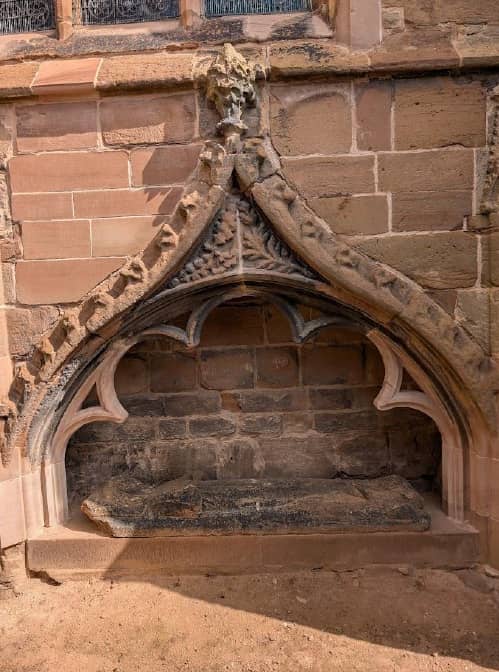 Effigy and surround before laser cleaning
 -
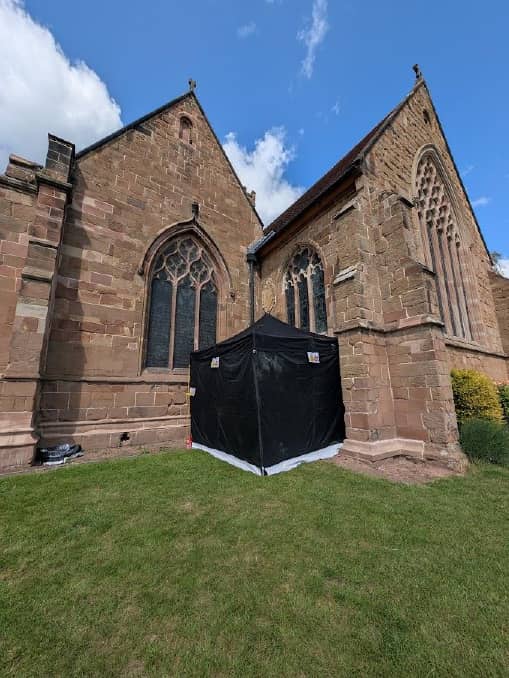 Blackout enclosure with signage
 -
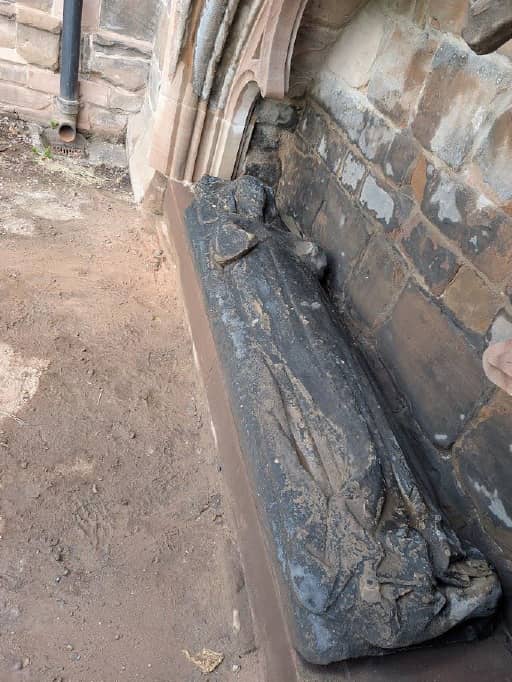 Effigy before laser cleaning
 -
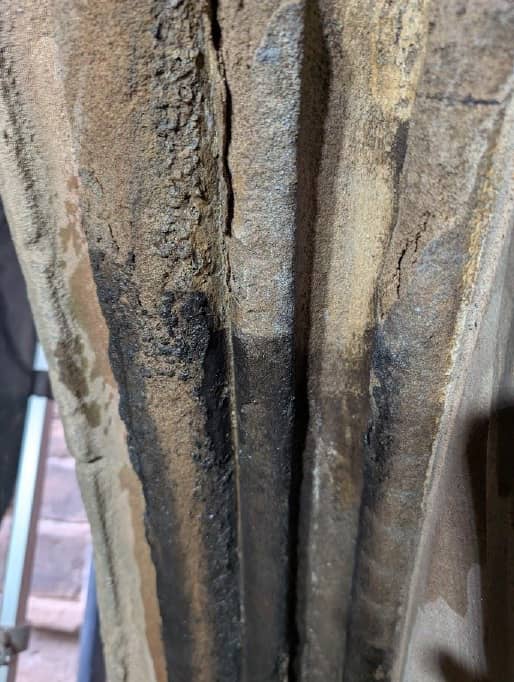 Half-clean section of the surround
 -
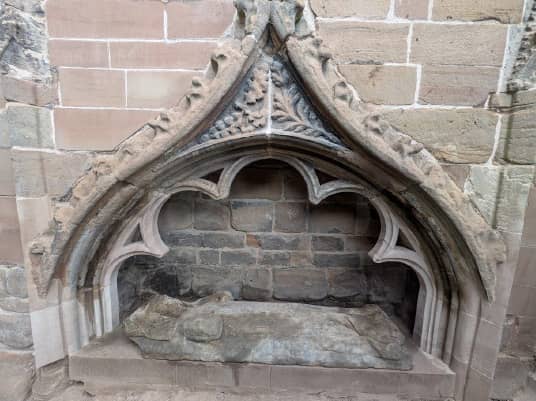 Effigy and surround after laser cleaning, but not fully dry
 -
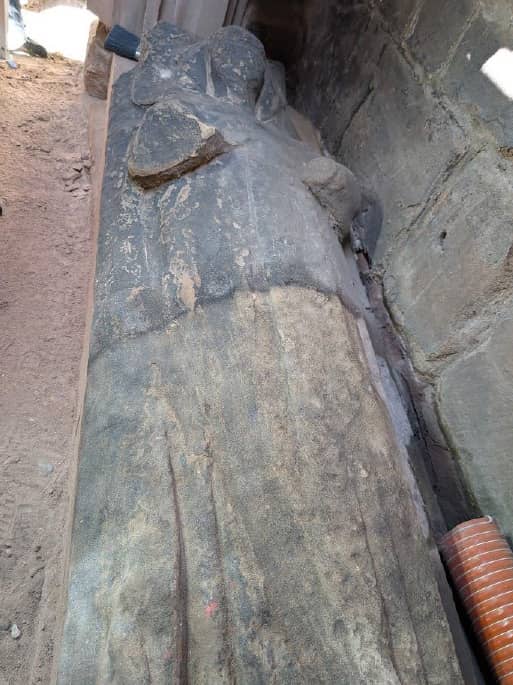 Effigy. Half cleaned
 -
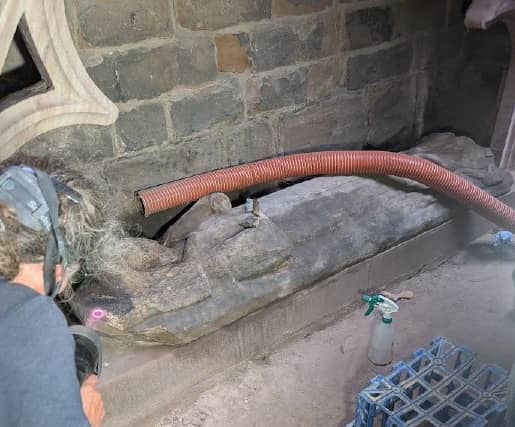 Laser cleaning in action